Hurricane Preparedness: Terminology
Understanding the difference between a tropical depression, tropical storm, and hurricane can help you better understand forecasts and make informed decisions as a system develops.
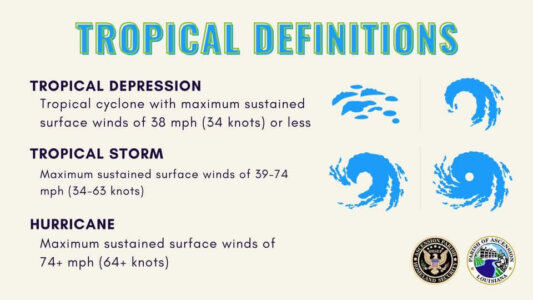
A tropical depression is an organized tropical cyclone with maximum sustained winds of 38 mph or less. Even at this stage, a system can produce heavy rainfall, localized flooding, gusty winds, and dangerous conditions.
Once maximum sustained winds reach 39 mph, the system becomes a tropical storm and receives an official name. Tropical storms can bring damaging winds, tornadoes, storm surge, and significant flooding—especially when they move slowly or produce prolonged rainfall.
A system becomes a hurricane when maximum sustained winds reach at least 74 mph. Hurricanes are then classified from Category 1 through Category 5 based on wind speed. However, the category only measures wind strength; it does not reflect other serious threats such as storm surge, rainfall flooding, or tornadoes.
Remember: every tropical system should be taken seriously, regardless of its classification. Impacts can extend far beyond the storm’s center, and conditions can change quickly.
Stay weather-aware, review your emergency plan, prepare your supplies, and always follow guidance from trusted local and official weather sources. Being informed today can help keep you and your family safe when severe weather threatens!
 Loading ...